Scientific Ocean Drilling Vessel
Core Description Laboratory
See Laboratory Manuals, Guides, and Resources for Core Description.
See the Core Deck panoramic virtual tour.
Function
Depending on the types of sediments or rocks cored, the scientists involved in core description may include sedimentologists, petrologists, or structural geologists. The main duties include
- Macroscopic visual description of split cores
- Microscopic observations from smear slides and thin sections
- Description and measurement of deformational structures
- Preliminary interpretation of depositional, diagenetic, or deformational processes
- Selection of samples for shipboard analyses
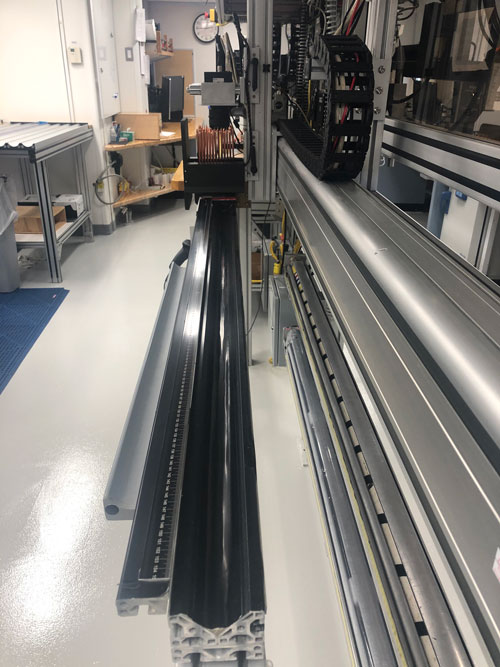
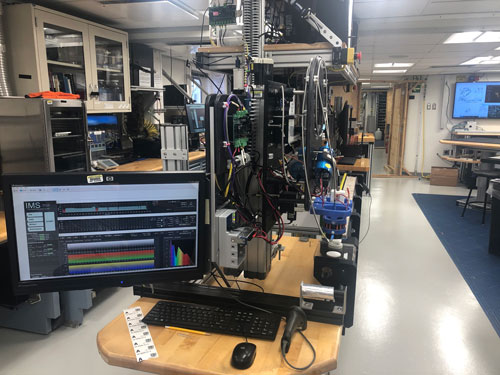
- Acquisition of data with split-core tracks, including digital images, diffuse color reflectance, and magnetic susceptibility
Instruments
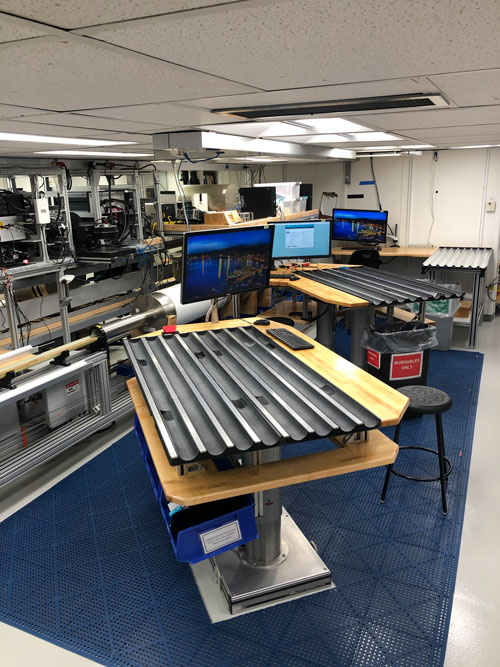
- Ergonomic visual core description stations and software
- DESClogik core description application
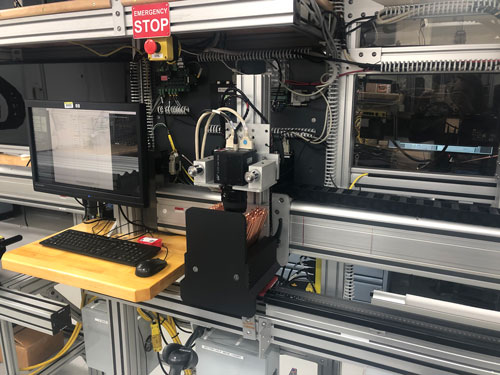
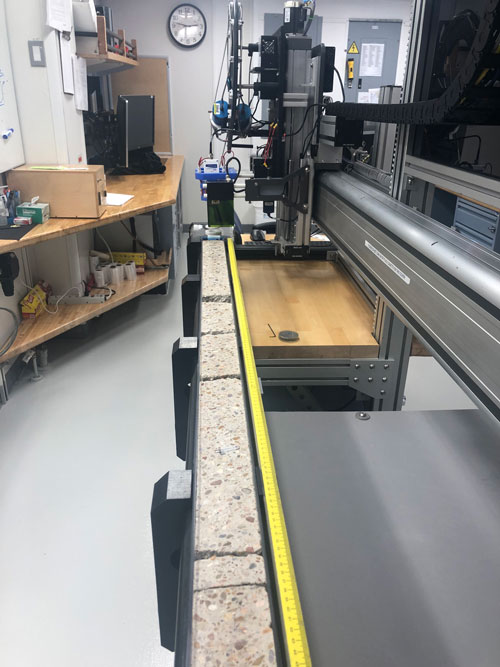
- Section Half Imaging Logger (SHIL)
- Section Half Multisensor Logger (SHMSL) for spectral reflectance and point-source magnetic susceptibility
- One Zeiss DISCOVERY V8 binocular zoom stereomicroscope
- One Zeiss Axioskop A1 microscope equipped for simultaneous transmitted and reflected polarized light viewing, with a large variety of objectives
- Minolta color reflectance spectrometers for manual scans
- Please note that proprietary manuals may be available upon request and subject to limited use